Tourist Guide to Longshan Temple in Taiwan | A Comprehensive Guide to Getting There, Fortune Sticks, Worship Etiquette, and Safety

What Kind of Temple Is Longshan Temple in Taiwan?
Let's start here

Longshan Temple, located in Taipei, Taiwan, is,A history spanning more than 300 yearsIt is one of Taiwan's most representative temples.
In this column, we’ll provide a comprehensive guide—covering everything from how to get there, how to pay your respects, how to draw a fortune slip, and even safety—so that even first-time visitors can feel at ease!
◆For those who would like to visit Longshan Temple while traveling in Taiwan
◆For those who want to know how to get there and where to find souvenirs
◆For those who want to know how to visit a shrine or draw a fortune slip


Taiwan Recommendations
Click here for tour ranking
The History and Faith of Ryuzan-ji Temple

Ryuzan-ji Temple isFounded in 1738It is one of the oldest temples in Taipei.
Having garnered deep devotion from the local community, it has undergone numerous restorations to reach its current state.


A History from Its Founding to the Present
Ryuzan-ji Temple was founded in 1738 during the Qing Dynasty,Immigrants who came from Fujian ProvinceIt was founded by .
Since then, despite suffering damage from earthquakes and air raids during the Japanese colonial period, the community has repeatedly restored and rebuilt the area through the efforts of local residents.
Although the current building was rebuilt after World War II, it still conveys the beauty of traditional Chinese temple architecture.
The Deities Enshrined at Ryuzan-ji Temple
Ryuzan-ji Temple isA Fusion of Buddhism, Taoism, and Folk BeliefsIt is a unique temple.
The main hall enshrines the Bodhisattva Kannon (Kannon Bosatsu) and attracts many worshippers.
In the rear hall is Wenchang Dijun (the god of scholarship), ·The Old Man Under the Moon (God of Matchmaking)・One of its distinctive features is that it enshrines various deities, such as Mazu (the goddess of the sea), each believed to grant different blessings.


The Significance of Longshan Temple for Local Taiwanese
Ryuzan-ji Temple is not only a tourist attraction, but also a place where local peopleA "place of living faith" where people come to pray on a daily basis"It is.
Seeing local residents offering fervent prayers with incense sticks in hand from early in the morning is a precious scene that gives a vivid sense of Taiwan’s religious culture.
One of Ryuzan-ji Temple’s charms is its welcoming atmosphere, where everyone—whether tourist or local—is made to feel at home.
Directions to Ryuzan-ji Temple・
Directions from the Nearest Station

Ryuzan-ji Temple is very easy to get to.Taipei MRT (Subway)If you use this service, you can get there easily from the main areas.

◆Directions: About a 2-minute walk from Ryuzanji Station
Walking Directions from MRT Longshan Temple Station
The nearest station isMRT Bannan Line “Longshan Temple Station”Once you exit the station, head for Exit 1.
As soon as you exit, you'll see Ryuzan-ji Park. Once you pass through the park,About a 2- to 3-minute walkThis will take you to the main gate of Ryuzan-ji Temple.
You'll hardly ever get lost, so even first-timers can head there with confidence!
How to Get There by Bus or Taxi
If you're taking the bus, the "Guangzhou Street Intersection" bus stop is the closest one. Since there are several bus routes running from various locations throughout Taipei, you should choose a route based on where you're staying.
If you're taking a taxi, just tell the driver "Longshan Temple."
If you're coming from downtown Taipei, the travel time isAbout 10 to 20 minutes, Estimated fees areAbout 100 to 200 New Taiwan dollarsIt is.
↓Enjoy yourself without worrying about your luggage!
Click here for our recommended plans↓
An Explanation of How to Visit Ryuzan-ji Temple and the Process Involved

At Longshan Temple, Taiwan's uniqueWays to Visit a ShrineThere are
If you familiarize yourself with the procedure beforehand, you’ll be able to enjoy your visit more smoothly.


What to Prepare Before Visiting a Shrine and Dress Code Etiquette
You don’t need to bring anything special to visit Ryuzan-ji Temple. Incense sticks are available for purchase at the shop on the temple grounds (Approximately 30–50 New Taiwan dollars per bundle)。
When it comes to clothing, it is considered good manners to avoid revealing outfits.
It's best to wear clothing that covers your shoulders and knees when you visit.
The temple grounds are quite large, so we recommend wearing comfortable walking shoes when you visit.
How to Offer Incense and Joss Sticks
Once you've lit the incense stick, hold it with both hands at chest levelBow three times.。
Next, let’s place incense sticks in each incense burner on the temple grounds.
The order is"Front Hall → Main Hall → Rear Hall"This is the basic procedure. Please clasp your hands in prayer before each deity and offer incense while silently reciting your wish in your heart.
This produces a lot of smoke, so please be careful if you have sensitive eyes!
How to Pray to God and Make Requests
When you pray,Your name, date of birth, address, and requestThe Taiwanese custom is to silently convey this to God in your heart.
It is said that if you carefully convey “who you are, where you’re from, and what you’d like to ask for,” your prayer is more likely to reach God.
It’s okay to use Japanese, so please feel free to make any wishes you’d like—whether it’s for a safe trip or finding a partner.
Taiwanese-Style Fortune Slips
How to Draw "Jiaobei"

The fortune slips at Ryuzan-ji Temple are a little different from those in Japan, “Jiaobei"It is drawn using a unique method known as ''.
Even if you're a first-timer, you'll feel at ease as long as you know the steps!


Rituals and Procedures Before Drawing an Omikuji
To draw an omikuji, first"Jiaobei"You'll use two crescent-shaped red pieces of wood called [...].
These are placed in front of each deity, and you are free to use them.
First, tell the deity your name, address, date of birth, and your request, and ask for permission by saying, “May I draw an omikuji?”
After that, you cup the divination sticks in both hands and toss them onto the floor while praying.
How to Look Up Your Omikuji Number: An Explanation
There are three possible outcomes for the divination sticks. One "heads" (flat side) and one "tails" (round side) appeared."The Holy Grail (Shenbei)"That's the OK sign.
When the Holy Grail appears, shake the bamboo fortune-telling tube to check the number.
If the same number is drawn, please take the corresponding number tag from the drawer.
If both sticks land face up (“Xiao Bei”), it’s a sign that the gods are smiling, so try again. If both sticks land face down (“Yin Bei”), it’s a sign that the gods are angry, so offer your prayers again before trying once more.
How to Read and Take Home Your Fortune Slip
The fortune slips are inscribed with poems and prose in Classical Chinese, which you read by referring to the explanatory booklet.
On the temple grounds, there isJapanese Instruction ManualSometimes you'll find one there, too.
You can take the fortune slip home with you.
If the result is "good," it is customary to take it home with you; if it is "bad," you are supposed to tie it to a designated spot on the shrine grounds before leaving.
Safety and Precautions for Visitors to Ryuzan-ji Temple

Around Ryuzan-ji TemplePublic SafetyIf you have the correct information in advance, you can enjoy sightseeing with peace of mind.
↓Fun for parents and kids alike!
Click here for our recommended plans↓


Safety Information for Daytime and Nighttime
Longshan Temple is in Taipei's"Wanhua" AreaIt is located in [...]. There are many tourists during the day, and it is generally safe to visit.
On the other hand, at night, the area around Ryuzan-ji Park is also a place where many homeless people gather.
It's best to avoid walking alone late at night and visit during daylight hours.
At night, Ryuzan-ji Temple is illuminated, creating a magical atmosphere, soFrom the evening until around 8:00 p.m.Let's aim for a visit around that time.
Etiquette and Rules Tourists Should Be Aware Of
Ryuzan-ji Temple is an active place of worship, so it is important to observe proper etiquette while visiting.
Please be considerate so as not to disturb local residents who are visiting the shrine.
Photography is generally permitted, but pointing your camera at people who are praying may be considered rude. Please be as discreet as possible when taking photos in the presence of the deities.
Also,Do not touch sacred objects without permission.It is also an important courtesy to do so.
Souvenirs and Tourist Attractions Near Ryuzan-ji Temple

Around Longshan Temple, you'll find typical Taiwanese souvenirs andTourist Attractions...is extensive.
Be sure to enjoy a stroll after your visit!
Recommended Souvenir Shops Around Ryuzan-ji Temple
Located right next to Ryuzan-ji Temple"Ryuzan-ji Underground Shopping Arcade"is a shopping area lined with Taiwanese goods, accessories, and good-luck charms.
In addition, the area around the “Bopiliu Historic District,” which is within walking distance, is dotted with shops selling traditional Taiwanese sweets, dried goods, and tea.
If you're not sure what souvenirs to buy, take a stroll around here!
Nearby Tourist Attractions and Dining Information
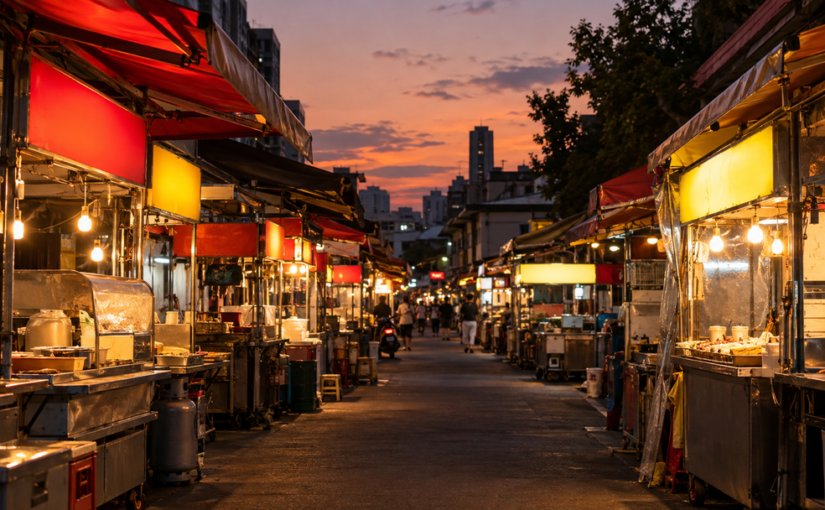
Just a short walk from Longshan Temple, the “Mongkao Night Market (Bopiliao Night Market)” is a hidden gem where you can enjoy local cuisine.
You can enjoy authentic flavors like Taiwanese-style sausage, stinky tofu, and tapioca.
Also, if you go a little further,"Ximending" and "Chiang Kai-shek Memorial Hall"It's also nearby and is a popular half-day sightseeing route in Taipei that includes Longshan Temple.
About Longshan Temple in Taiwan
Frequently Asked Questions (FAQ)
summary

Longshan Temple in Taiwan has a history of over 300 years and is one of Taipei’s most renownedPower SpotIt is.
It’s easily accessible from the MRT “Longshan Temple Station,” and you can enjoy a temple visit that’s a little different from what you’d find in Japan, including Taiwanese-style worship and the “jiao bei” fortune-telling ritual.
In terms of public safety,Visits During the Dayis recommended.
Be sure to enjoy plenty of authentic Taiwanese experiences, including the nearby night markets and souvenir shops!
↓Click here to read the article.